GR User Forum

The spot for all Ricoh GR camera users

Register for free, meet other Ricoh GR users, share your images, help others, have fun!

Tell your friends about us!

CX2 - Miniature mode

Joined
Aug 11, 2007
Messages
6,036
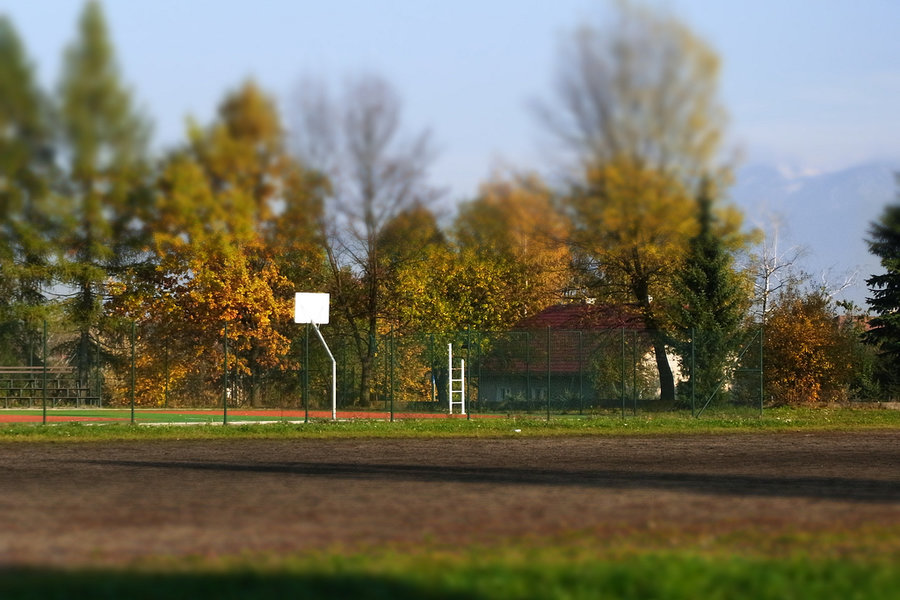
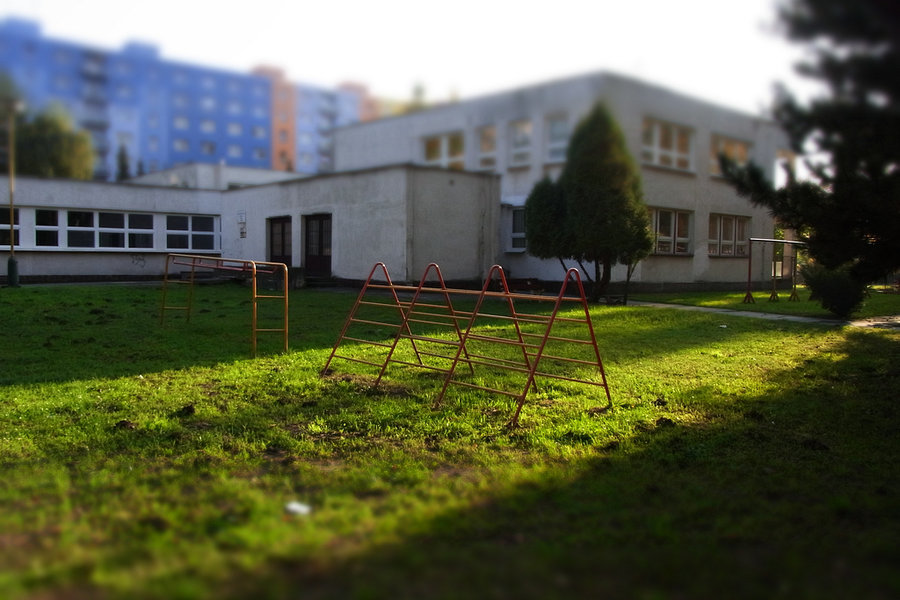
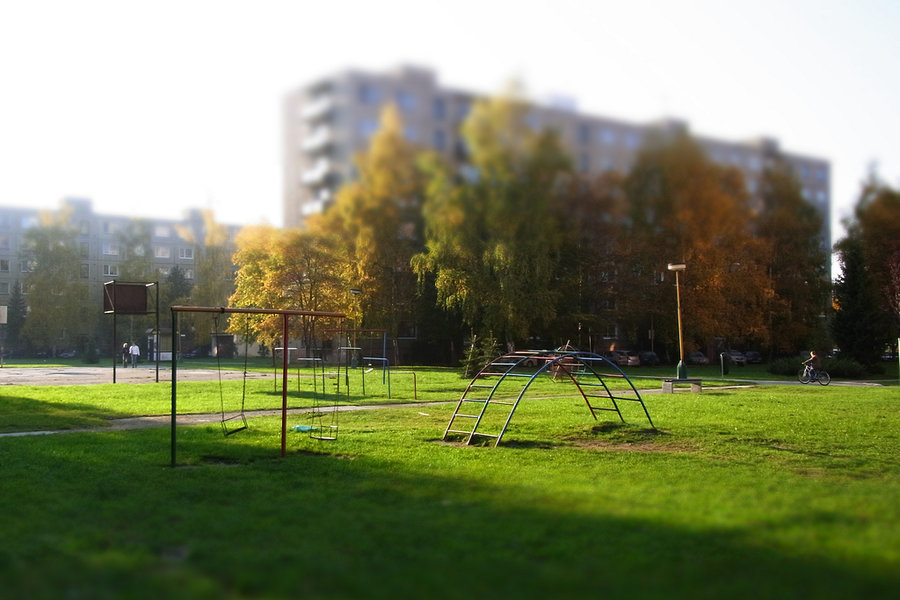
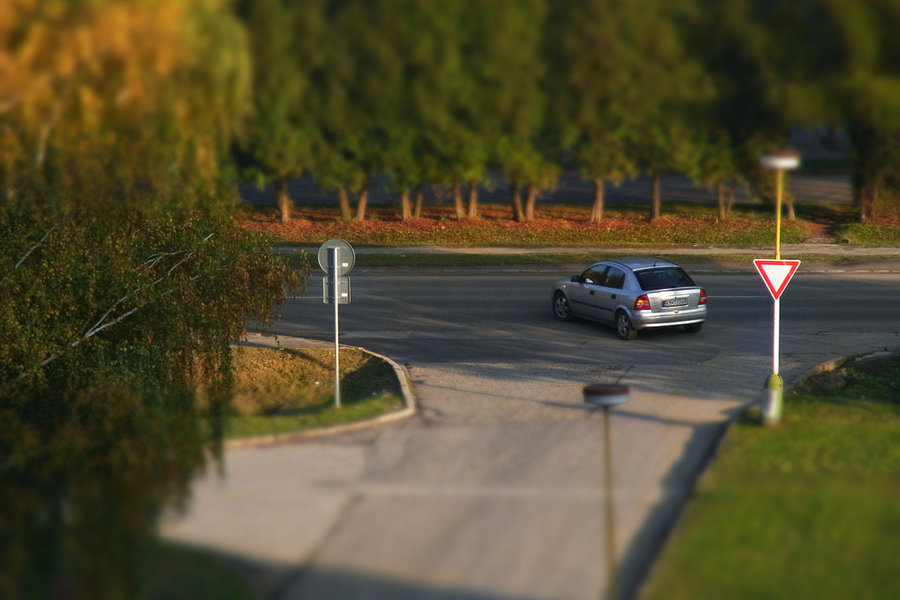
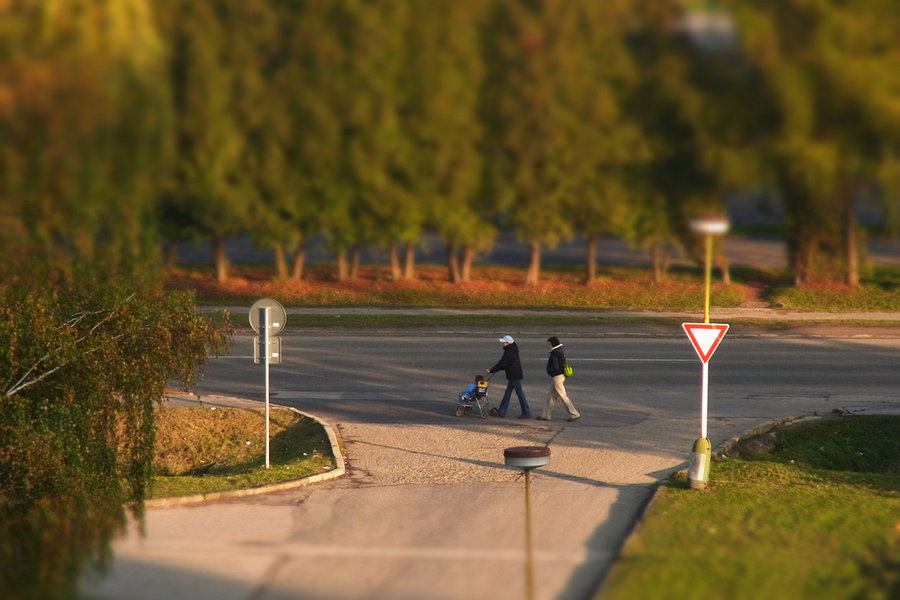
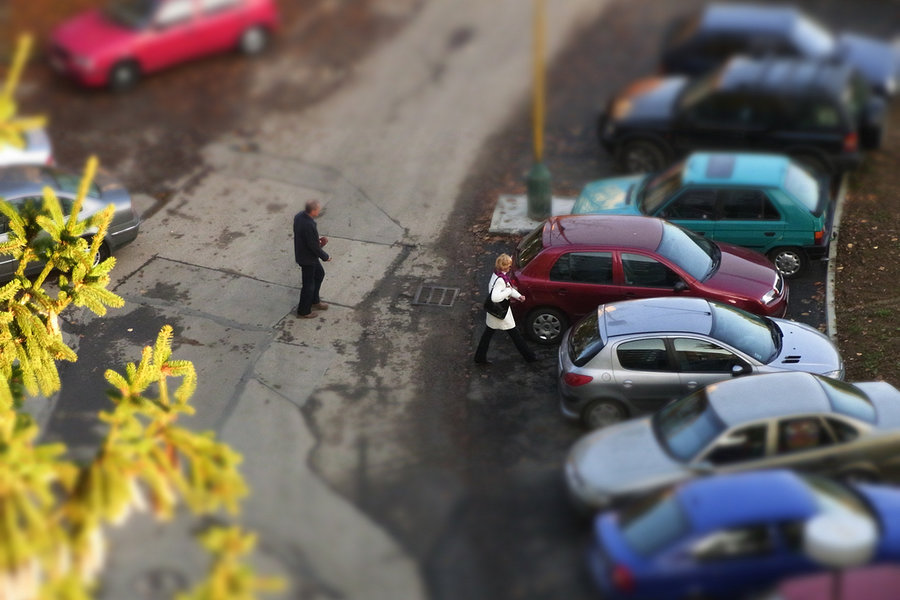
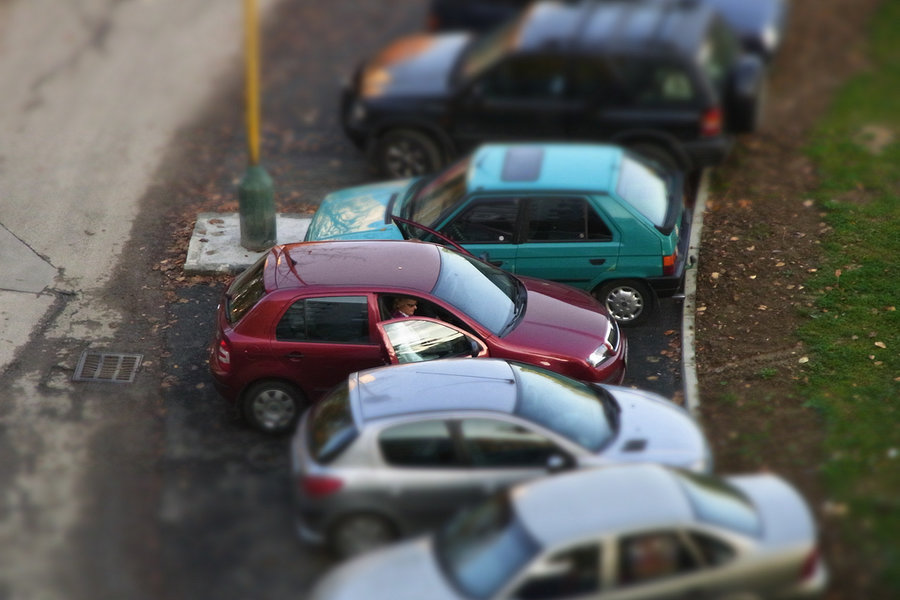
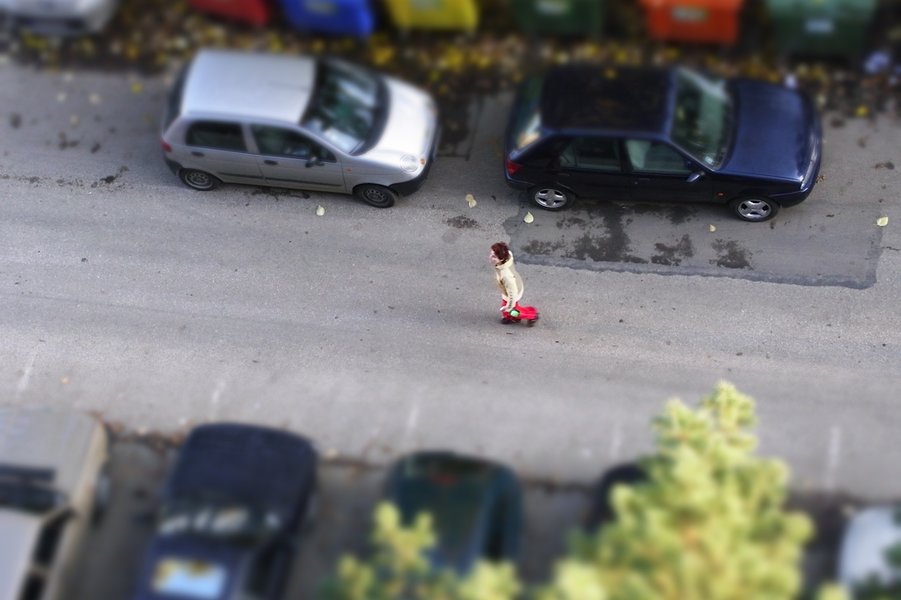
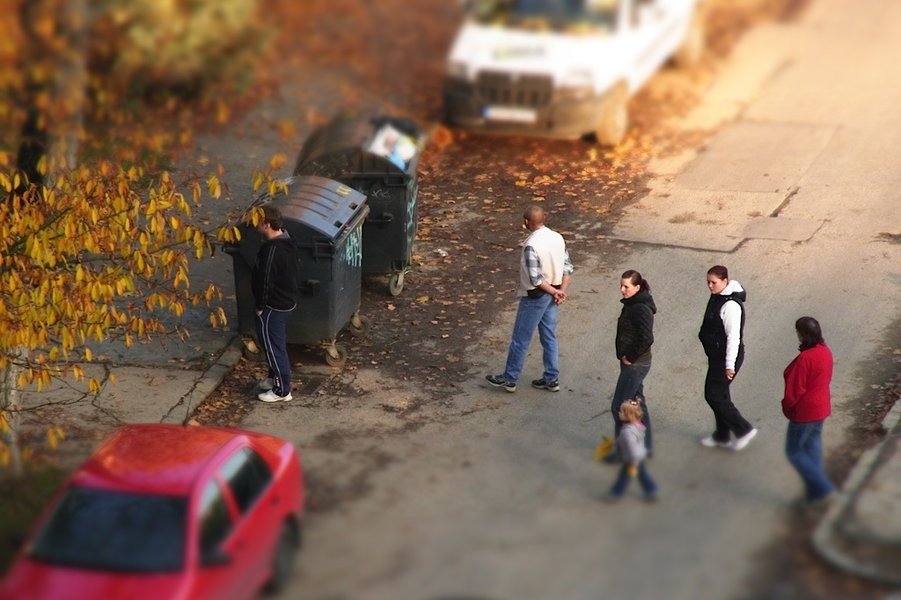
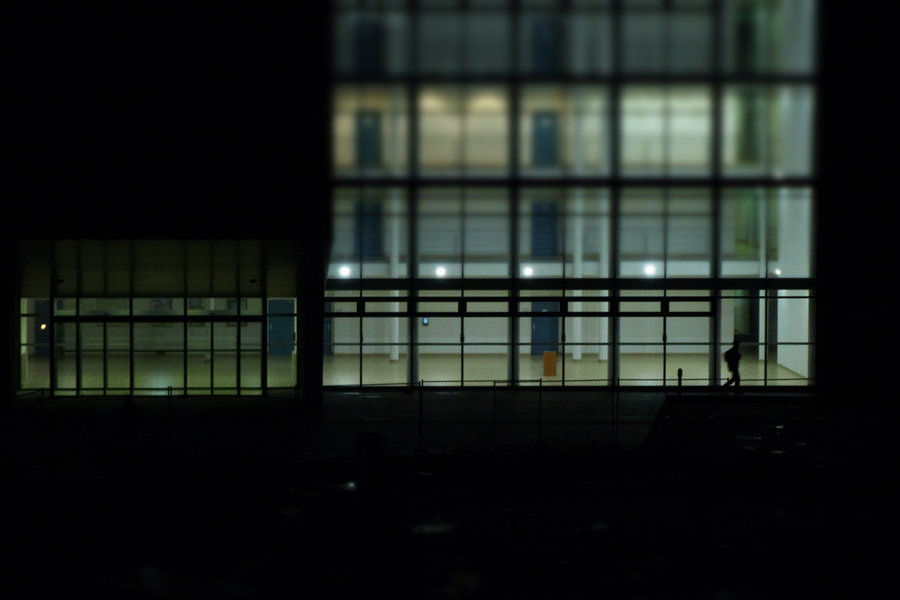
Miniature scene mode is one of the most fun (and surprisingly very useful) features introduced with CX2.

The basic idea of the Miniature mode is to heavy blur the foreground and background of the image except the narrow area of image with the main subject of interest. This gives the output image a miniature/model-like look and feel. This effect is well known from till/shift lenses. But lenses are only available for SLR/DSLR cameras and they are quite expensive to be used just for this "miniature" fun.

However, this effect is very easily reproducible in any good image editor with masking, gradients and Gaussian blur. The procedure is called "fake tilt-shift" or "fake miniature". You can see a lot of examples at Flickr. If you want to know more details about making fake miniatures, see for example this tutorial...
http://www.visualphotoguide.com/tilt-sh ... re-scenes/

No matter how easy the "fake miniaturization" process is, the CX2 way is even easier ;) All you have to do is to set the position of the "in-focus" area and define its size (done in menu accessible via FN button). Then simply focus the camera and press the shutter. That's all.

Here are some quick examples taken during yesterday's small walk with Lucia and after returning home...
 

Attachments

  • R1060368_sm.jpg
    R1060368_sm.jpg
    409.3 KB · Views: 6,415
  • R1060372_sm.jpg
    R1060372_sm.jpg
    387.8 KB · Views: 6,429
  • R1060374_sm.jpg
    R1060374_sm.jpg
    334.8 KB · Views: 6,496
  • R1060393_sm.jpg
    R1060393_sm.jpg
    327.4 KB · Views: 6,524
  • R1060403_sm.jpg
    R1060403_sm.jpg
    354.8 KB · Views: 6,595
  • R1060414_sm.jpg
    R1060414_sm.jpg
    343.3 KB · Views: 6,639
  • R1060415_sm.jpg
    R1060415_sm.jpg
    318.4 KB · Views: 6,722
  • R1060400_sm.jpg
    R1060400_sm.jpg
    196.7 KB · Views: 6,472
  • R1060410_sm.jpg
    R1060410_sm.jpg
    232.9 KB · Views: 6,540
  • R1060420_sm.jpg
    R1060420_sm.jpg
    278 KB · Views: 6,563
  • R1060452_sm.jpg
    R1060452_sm.jpg
    393.3 KB · Views: 6,206
  • R1060449_sm.jpg
    R1060449_sm.jpg
    223.2 KB · Views: 6,132
Pavel, thanks for the imput. It seems a very interesting and creative feature ;-)

BTW, I'm a bit confused with this feature. I thought that "tilt & shit" was a lens system used for perspective correction. Of course that I remember this from ages ago, and never had the chance to use it ;-)
 
You are of course right Rui. Tilt&Shift lenses are typically used for perspective correction. However, with tilling feature you can use them for selective focus. See the Fake Miniature example using Tilt function in this review:
http://www.dpreview.com/lensreviews/can ... /page5.asp
Lensbaby is another good example of lens for selective focus. But I personally never liked the Lensbaby output. The images taken with Lensbaby looks defective and not like something I would do for purpose ;)
 
Thanks again, Pavel.

I can imagine this with macro... well, I think this is a very creative feature in any area ;-)

Altough I wonder why we spend money in glasses to correct our vision at same time we do it for "distortion" with photography :roll: :mrgreen:
 
Interesting feature...and good colour and good sharpness from what I can see with my failing eyesight! :)

I would be interested to know what the high end of the tele performs like... ;)
 
Rui,

Tilts and shifts are functions of moving the lens relative to the film that many large format photogs use, People using 4x5 or 8x10 cameras are familiar with them. Some camera manufactures make shift only lenses to correct that leaning over building look but there are tilt/shift lenses also and its the tilt function you need. I've seen a interval movie done using a tilt and it looks like a little village with people running around.

I think the CX2 could be worth buying for this function alone if you are interested in this feature - I have not seen it on any other camera!
 
Thanks Pavel

I have a tilt shift lens for my Canon dslr - the effect that the miniature mode is more like that given by a Lensbaby (which I also have).

Both types are quite difficult to use as well as being expensive. Adjusting captured images in software is also a bit fiddly. Consequently if the CX2 can give this with no trouble at all then it is very worth while.

The eye does't blur out an image in exactly the same way as this effect does but the mind does focus on part of an image and very quickly. This is how a human brain seems to work. In a conventional image fully in focus the eye will scan it and find the points of interest and then the brain will focus on them. In the case of images where the photographer's mind has already determined the point of interest the image reflects this and blurs the rest of the image to suit. Consequently another person viewing the image can focus straight on the subject without the momentary strain of finding it. Strange as this might seem it gives a pleasing feeling. Therefore this feature is likely to be popular although purists might disagree. If used unwisely the results would not be good.

The tilt shift lens is hard to use because the camera light metering doesn't work properly once the shift is applied and gets increasingly stressed the further the shift is applied. However patience works well and it is best not to be in a hurry. The Canon tilt is one way only but can be changed by Canon (and I am not into the procedure shown on the web by someone who has done it - smile) therefore the the tilt is not as versatile as it might be. I believe the latest model shift can be rotated by the user - but I have the 'original'.

The idea of tilt shift is to keep everything in focus this is why I wonder why 'miniature mode' has been likened to tilt/shift. The lens is an architectural one and can keep sweeping panoramas in better focus at smaller stops by by using the tilt feature. However it is possible to reverse its use to throw parts of the image out of focus - this is more the use of a by-product than its intended use and in the case of the original Canon models can only be done up-down or left-right depending upon the factory setting. Shift of course is designed to fix parallax and does not give a blurrring effect.

The lensbaby is a very basic lens based on a bendy tube but now more sophisticated in its later incarnation - I would recommend that users check out the lensbaby site which will give some idea of what Ricoh's miniature mode can do - if you own a dslr then I suggest that you buy a lensbaby just for the heck of it - the dollar is quite low at the moment and therefore the lensbabies are almost affordable (smile).

http://www.lensbaby.com/gallery-photo.php

The lensbaby is not connected to the camera other that through the basic mount lugs - therefore everything is manual and you even need to drop 'washers' into the front mount to vary stops. Just like the old days. It does have the distinct advantage of being able to show what f-stops are - the lens mount inserts are clearly marked with the 'stop' number and laid out on the table can be used to explain f-stpops to a neophyte.

The lensbaby is also not that easy to use well but the results are worth it - as you might be able to see. Perhaps it was the rise of the lensbaby company that convinced Canon to make their own very expensive tilt/shift a bit more usable?

If you can get the same effect at the twist of a dial, and reliably as well ... the CX2 is a wonder. When is Ricoh going to send me one to test?

Again we must realise that the original idea of tilt/shift was to de-blur not to selective blur (although that can be done) the Lensbaby cannot de-blur but does a great job with selective focus.

Therefore Ricoh is probably more correct to call it 'miniature mode' rather than 'tilt/shift' although 'selective focus' might be even better.

Tom
 
Re: CX2 - in-camera shift?

When the feature of 'miniature mode' was first mentioned in relation to the CX2 someone described it as 'shift mode' and I instantly became quite excited. However after visiting the Ricoh company page and reading about their miniature mode I found that it was no 'shift mode' in fact Ricoh does not say anything about tilt or shift. The effect is more like 'tilt' used incorrectly to give an effect.

This made me think. Obviously something I do rarely (smile).

If we now have the wonder of a side to side level - a very useful feature that I had thought I might never need - then why not fit a fore and aft level as well?

At first this seems an unecessary complexity and in most photography we do not need to level the camera in this manner. However the fore-aft level could be hidden from the user. I am starting to sound like nonsense but read on ...

If Ricoh can master the corrections necessary in-camera to give a shifted lens effect then why not do the same for other images distorted by camera tilt?

Rui would buy one straight away if the camera could correct architectural distortion.

How would it work? Well the camera in 'shift mode' would take a reading of the camera angle from the fore/aft level and apply this through software to correct image distortion caused by this angle - simple. (At least the idea is but anyone who can organise software to give a miniature mode effect should find this a snack - CX3 perhaps?) It is really no more than a version of skew mode applied to the whole image.

Correction of tilt distortion through angle of view would be a bit harder and would perhaps be impossible - how do you bring parts of the image back into focus without tilting the lens? However if the image was focussed entirely it might be able to be changed by dialling in a restricted range of angles manually and have the camera software 'correct' the scene.

I suggest this latter thought might be a bit twee and would be more used for the effects than really usable. However there is a good possibility that a proper shift correction might be possible and would work at least as well as later software correction on computer.

Notably we already a have a sideways level and therefore the correction could be applied to images that are 'out' (skewed) in both directions to get a more correct architectural image where this is necessary - it is also a suitable addition to high-range cameras such as the GRDIII which could be used professionally for this purpose.

There would be limitations on what software can correct but this does not mean that such a feature would not be useful within these limitations (and a long extension ladder).

Pavel to Ricoh ...Pavel to Ricoh .... callling ...?

Tom
 
Re: CX2 - shift mode too complex?

Full of brainwaves this morning in overcast Australia.

I am aware that the level function might not be accurate enough to deliver a precise architectural result by applying skew mode correction automatically to a captured image.

However I have wondered for some time why Ricoh just don't allow a skew mode for an entire image with the resultant blank area simply filled with 'black' to be either cropped in-camera or later in software. Ricoh already have the skew mode correction in their cameras and this seems a simple extension into whole-image correction mode. This also could be used to fine tune automatic shift correction in shift mode - ie: once corrected by the camera would drop into whole image skew-correction mode for the user to touch up manually or accept. The images thus corrected would be 'smaller' in pixel capture due to the cropping effect. Of course any image captured normally could still have whole image skew correction applied later.

Seems do-able - how about it as a suggestion to Ricoh Inc?

I will hold off on updating my Canon tilt/shift in the meantime (but don't panic - I am in no rush) - smile.

... but I will have to keep playing with my lensbaby on dslr until Canon send me a CX2 - hint, hint ... do they need my address?

Tom
 
Tom Caldwell":3jnq66if said:
The idea of tilt shift is to keep everything in focus this is why I wonder why 'miniature mode' has been likened to tilt/shift. The lens is an architectural one and can keep sweeping panoramas in better focus at smaller stops by by using the tilt feature. However it is possible to reverse its use to throw parts of the image out of focus - this is more the use of a by-product than its intended use and in the case of the original Canon models can only be done up-down or left-right depending upon the factory setting. Shift of course is designed to fix parallax and does not give a blurrring effect.

Yes, its like it could have been called "special tilt effect mode" or something or other, but I guess that is too long a name. Tilts and shifts originally came from the large format crowd and then specialist lenses appeared for the 35mm SLR crowd later. I owned an Olympus Zuiko 35mm shift for a while but no tilt on that one - perspective control only. It was too expensive to warrant keeping for the use I gave it.

The face of photography is changing as you can correct converging verticals in software as well as Pavel suggested you can do this miniature mode in software. Somehow getting the original image from a CX2 seems more appealing?!
 
odklizec":2ijm2tdo said:
Miniature scene mode is one of the most fun (and surprisingly very useful) features introduced with CX2.
I was totalaly unawhere that this feature was available. It make sence that it can be done in canera with the flick of a button. (Ricoh, ya gotta luv em..)
Does the CX2 have interval 5 sec. to 3Hr. for timelapse? Because I've seen PP filters appleied to images latter & they do look fake.
Your images from the CX look almost like the real deal.
And how hard would it be to do this in camera with the push of a button.
Just move digataly the image over there. Although its more engineering & harder than that in reality.(Or so the boffins at Ricoh would say)
"Its not rocket sugery. Its digital ! "
Well done Ricoh, this is a feature I want.
 
Hope we can get that on the GRD III as a firmware update as well... Hope that can be done?!
 
jocs:
Yep, I'm sure this can be done. It's completely SW process and GRDIII should be powerful enough for this process. But you know, GRDIII is different kind of camera and its Scene modes are very limited because GRDIII users just don't want/need them. Especially not RAW photographers, where they are useless.

33dollars:
CX2 (as well as GRDIII) have reduced timelapse range from 5 secs to 1 hour. I guess the explanation of dropping 3 hours range lies in he battery drain.

Not so long ago, I tried to run long timelapse (one picture every hour) with GRDII and fully charged battery. The camera "died" only after taking 4 pics (it means 3 hours and few minutes of interval runtime)! If I would use 3 hours interval, the timelapse would end with just 2 taken pics. Another reason could be sensor heating?

In any case, I think the Ricoh implementation of timelapse mode with long intervals is not ideal. I believe the camera should be turned OFF between the long interval shots. Not necessarily with retracted lens. Just power OFF the sensor, LCD and almost everything except the timer and required electronic to be able to wake the camera up for next shot. This would greatly reduce the battery drain and allow to use long intervals with just single battery for a very long runtime. Sure, turning the camera OFF for intervals shorter or equal 1 minutes is probably useless. But I think this should be done for anything above 1 minute?
 
Back
Top